

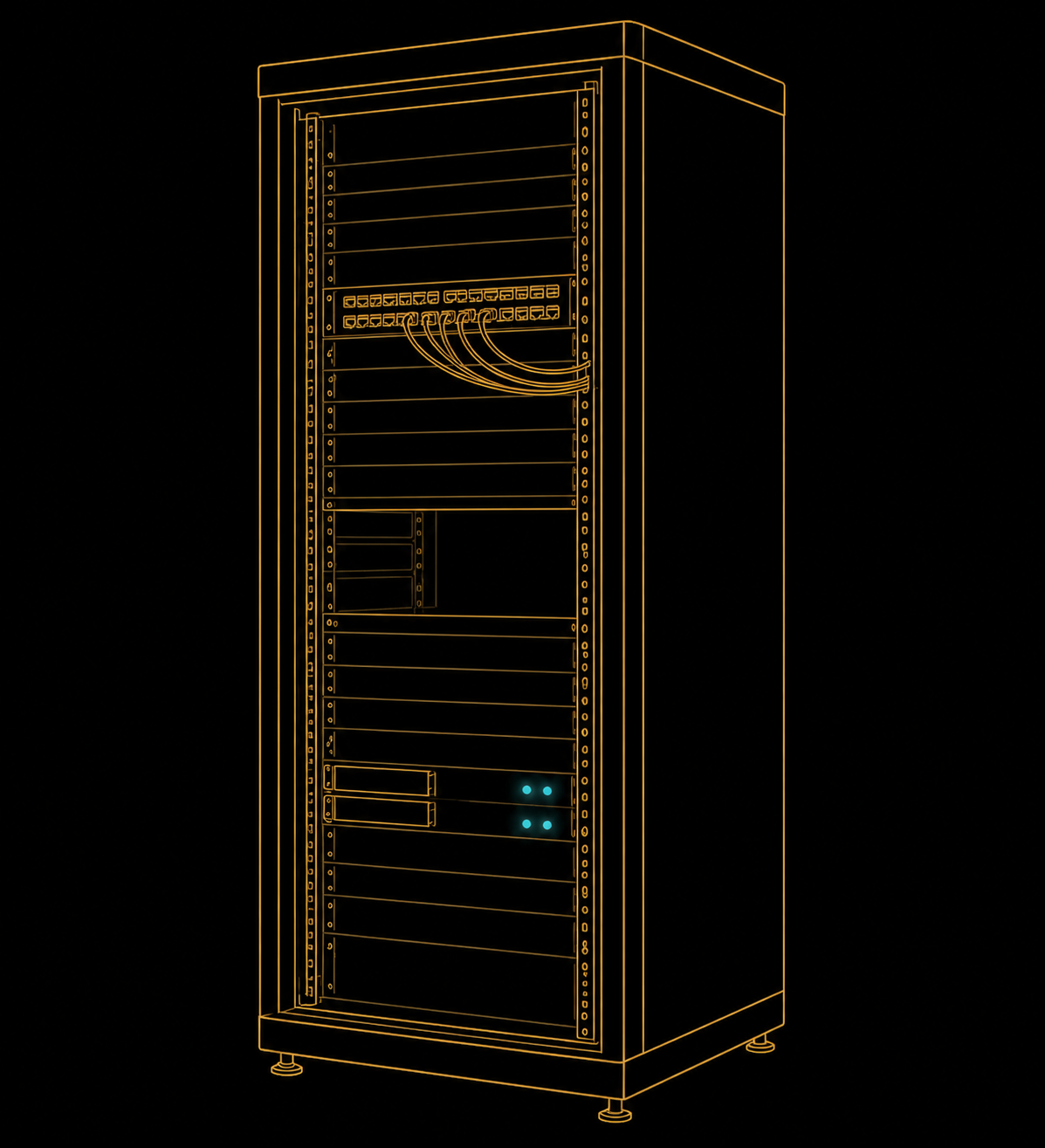
Assess hardware and capacity
GPU memory, system memory, model size, context and concurrent requests determine capacity. We test your requirements instead of promising a fixed user count.
Use AI in your company without uploading company knowledge to public AI services for local processing. HDN supports you from hardware assessment to controlled operation with PaulinAI.
HDN · SCHATTWALD
We start with your tasks, permitted systems and data sources. We then assess whether an existing workstation is sufficient or a dedicated GPU server makes sense. PaulinAI combines local models with company knowledge, P-Apps, sources, permissions and human approvals.
GPU memory, system memory, model size, context and concurrent requests determine capacity. We test your requirements instead of promising a fixed user count.
HDN plans model serving, network access and the operating environment. Employees can work in their browsers while processing takes place on your own server.
P-Chat for knowledge questions, P-Docs for document work and P-Workflow for approved processes are integrated to suit the project. Interfaces and read-only database access are assessed individually.
We configure source and app access, external providers, approvals and logging. Testing, training and an agreed operating and update plan support the rollout.
Service area
HDN – High-Definition Development & Networks GmbH – develops PaulinAI and supports regional companies with consulting, rollout and integration. On-site appointments and remote work are agreed for each project.
FAQ
No. Small models and large company models have different requirements. GPU capacity, memory, data volumes and concurrent requests must match. A browser workstation does not automatically need its own AI GPU.
Local processing can work offline with installed models and local sources. Online services and external APIs are then unavailable. Downloads, updates and outbound connections are addressed separately in the operating plan.
No. Local operation describes where processing happens. The beta workplace agent uses separate tools and permissions to operate applications. A model installation alone does not provide browser or desktop control.
This depends on hardware, data sources, integrations and scope. Services, operating costs and acceptance criteria are agreed after assessment. A focused pilot supports an informed decision before expansion.
HDN is developing this approach to combine local models with customer-specific extensions. The design requires tenant binding and verification of the customer hub signature before loading. Customer-specific extensions are intended to remain in that hub without reuse for other customers. Availability and benefit depend on the development stage and testing.